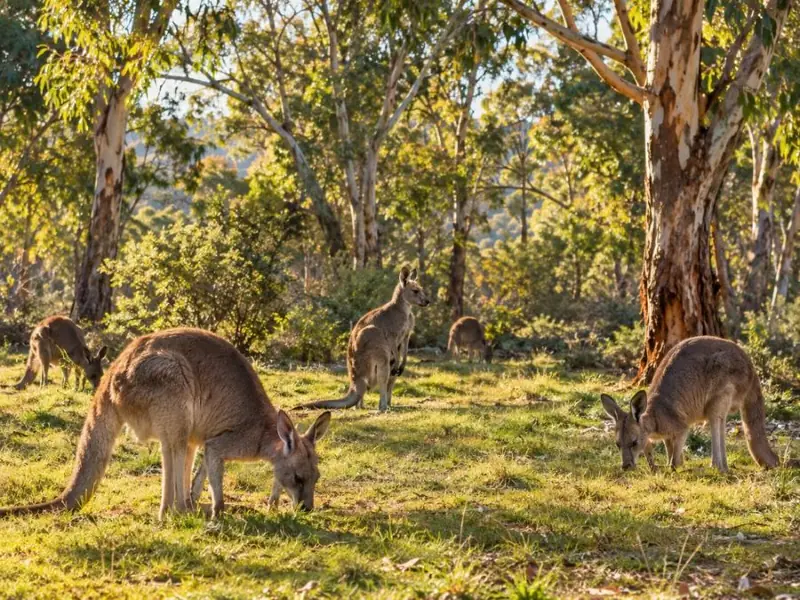
Booking choice: The wild kangaroos and sunset tour. Book this Tour details
The Blue Mountains are open all year, and every season has its case. Katoomba sits at about 1,000 m, so it runs cooler than Sydney all year round, by about 5 °C on average. That changes what to pack more than when to go.
Below: the best months by what you want to do, the weather by season, the best time of day, what fire season means for visitors, and the events worth planning around.
The quick answer
March to May and September to November are the best months: NSW National Parks recommends autumn for its cool, clear walking weather and spring for wildflowers and birdlife. July is the coldest month. Go early in the day and on a weekday if you can. October to March is bush fire danger period, and a park fire ban runs from 1 October 2026 to 31 March 2027.
Which month is best to visit the Blue Mountains?
Autumn (March to May) for walking, spring (September to November) for flowers and gardens. Both avoid the summer heat and the winter cold.
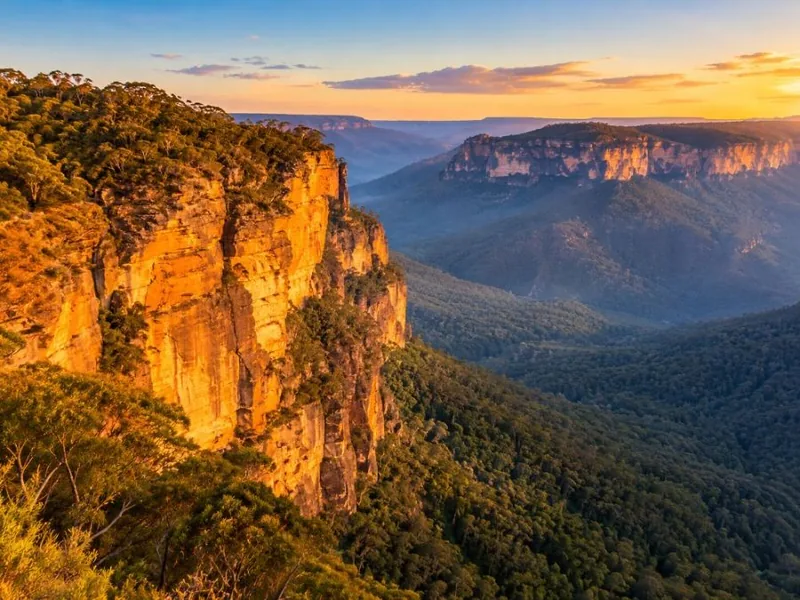
NSW National Parks gives its own seasonal advice: autumn brings cool, clear weather for bushwalking; spring is when wildflowers and birdlife peak; summer suits rainforest and canyon walks; winter brings misty mornings with Mount Solitary rising above the fog.
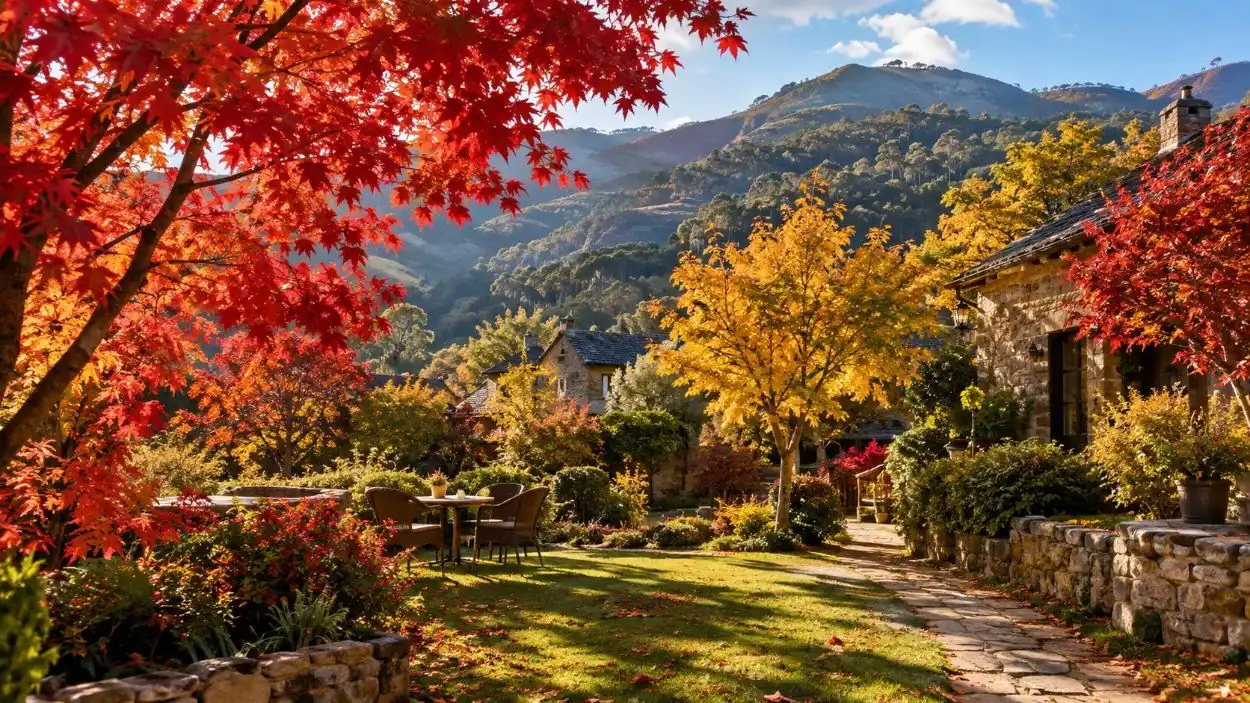
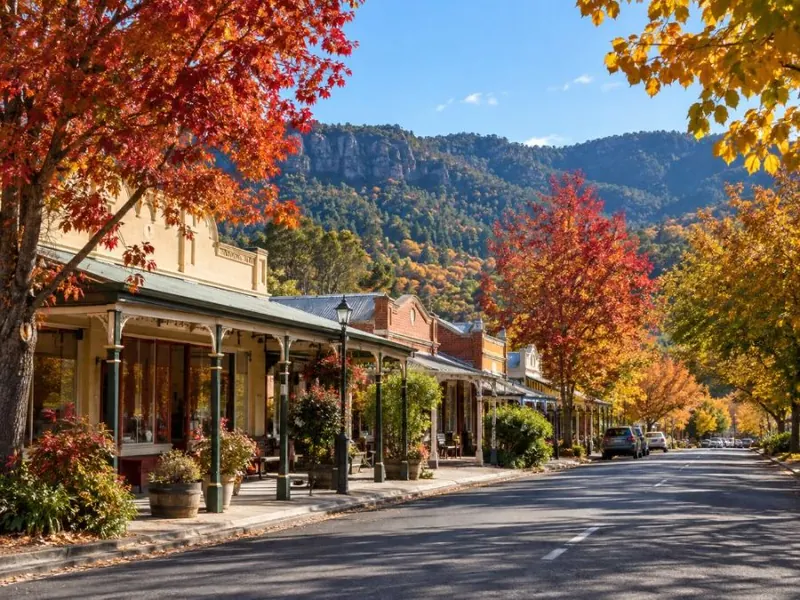
Our pick is April or early May. The days are mild, the deciduous trees in Leura and Blackheath turn red and gold, and the school holidays are over by the end of April. October is a close second, with the gardens in flower, though it falls inside fire season.
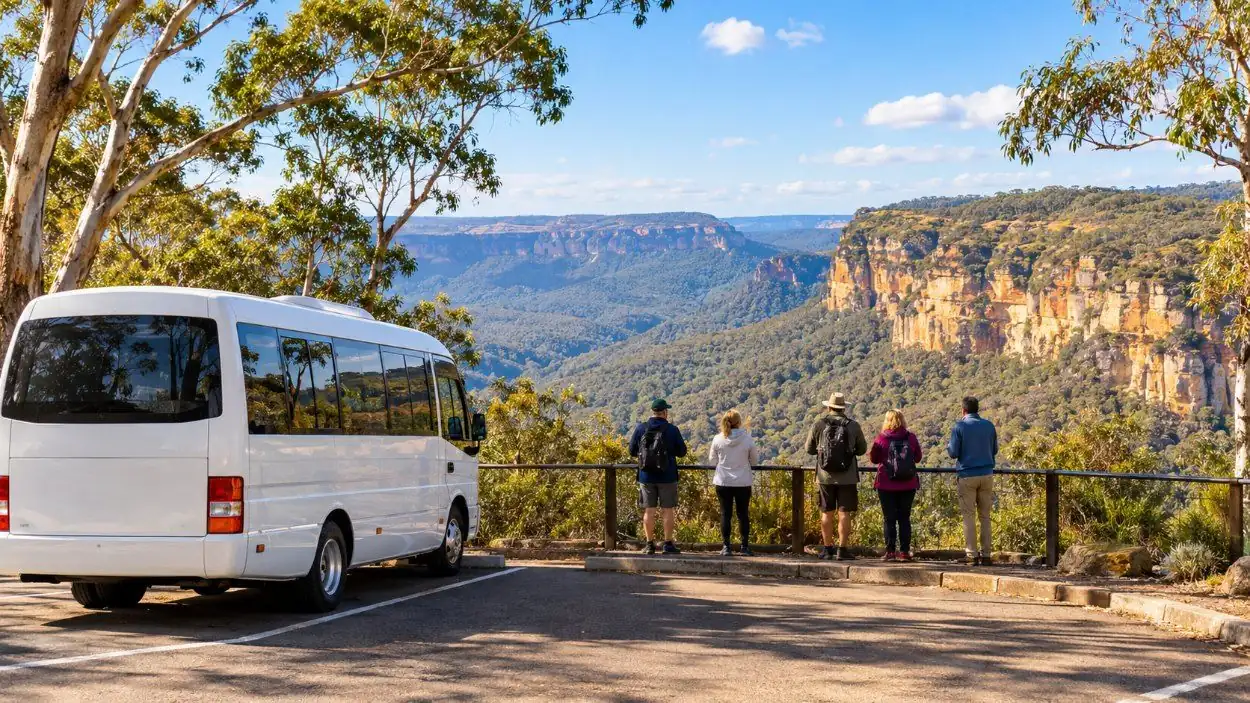
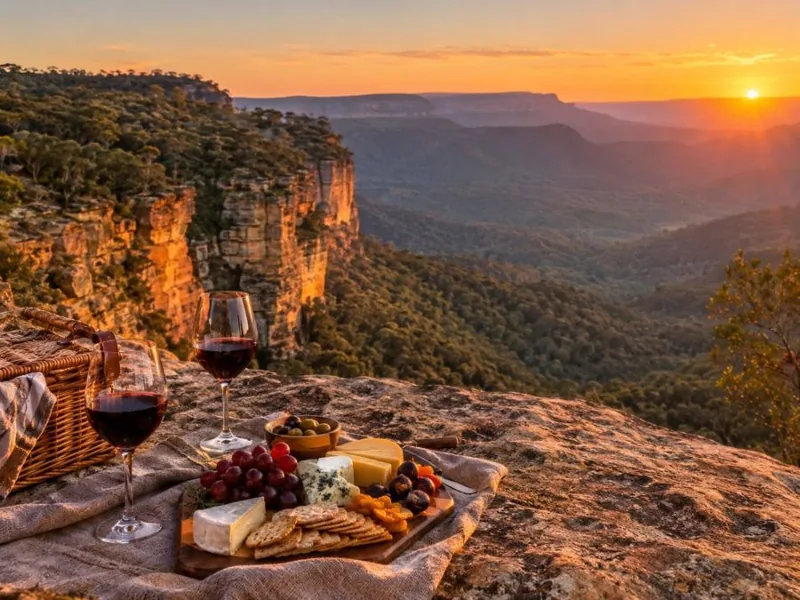
A late start, quieter lookouts and a sunset picnic, in a group of ten at most.
Book thisWhat is the weather like in each season?
Mild summers, cool autumns and springs, and cold winters with occasional snow. Katoomba is about 5 °C cooler than Sydney on average.
Averages for Katoomba from the Bureau of Meteorology (BOM, Katoomba station, 1,017 m):
| Season | Typical daytime high | What to expect |
|---|---|---|
| Summer (Dec to Feb) | 22.5 to 23.4 °C; January is warmest | The strongest blue haze, storms, February the wettest month |
| Autumn (Mar to May) | 20.4 °C in March, falling to 13.3 °C in May | Clear, cool walking days, autumn colour |
| Winter (Jun to Aug) | About 10 °C; July averages 9.6 °C | Mist, frost, the odd snowfall, log fires |
| Spring (Sep to Nov) | 14.8 °C in September, rising to 20.5 °C in November | Wildflowers, garden festivals, fire season begins |
What is the coldest month in the Blue Mountains?
July. Katoomba's average July high is 9.6 °C and the average low 2.7 °C.
By the BOM averages, July is the coldest month in Katoomba, followed by June (10.2 °C high, 3.8 °C low) and August (11.4 °C high, 3.4 °C low). Sydney's July average high is 16.4 °C, so the gap in winter is close to 7 °C.
Snow is possible from June to August in the upper mountains but never guaranteed, and rare below Lawson. Pack a warm jacket, a hat and gloves for any winter visit; the lookouts are exposed and the wind cuts through.
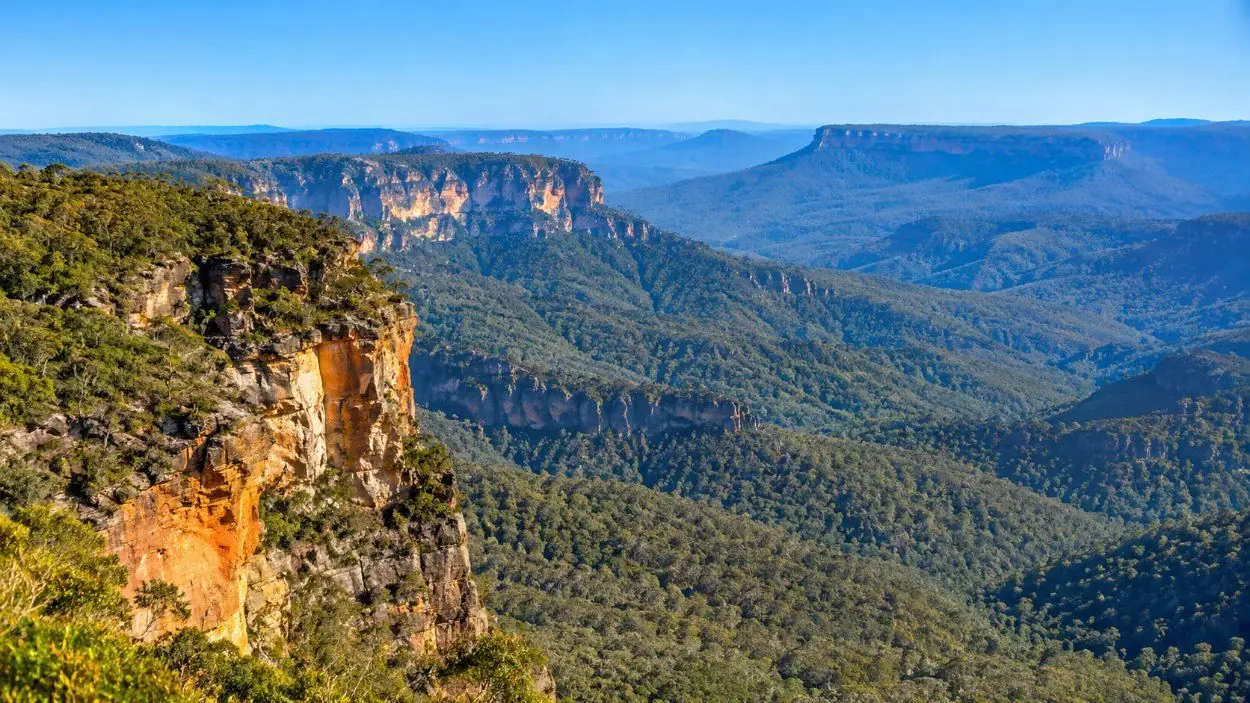
Is winter worth it? Yes, if you like mist rolling through the valley and a fire at the end of the day. The tracks are quieter, and cold, clear mornings can give the sharpest views of the year.
What time of day should I visit the Blue Mountains?
Early, and on a weekday if you can. Late afternoon is the other good window, for sunset light on the cliffs.
- Morning: Echo Point is quieter before the tour coaches arrive mid-morning, and parking there can be limited at weekends (NPWS). In winter, NSW National Parks notes misty mornings with Mount Solitary rising above the fog.
- Scenic World hours: 10 a.m. to 4 p.m. on weekdays, and 9 a.m. to 5 p.m. on weekends, NSW school holidays and public holidays (Scenic World). Book the first session to beat the queues.
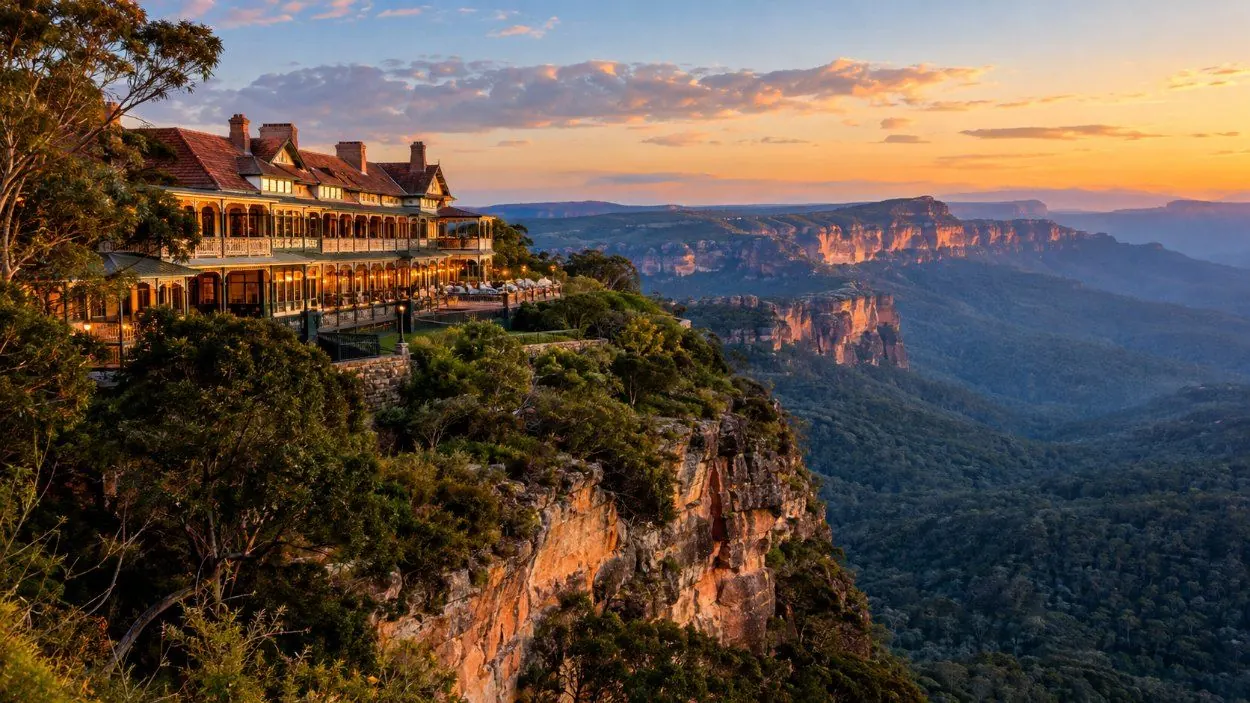
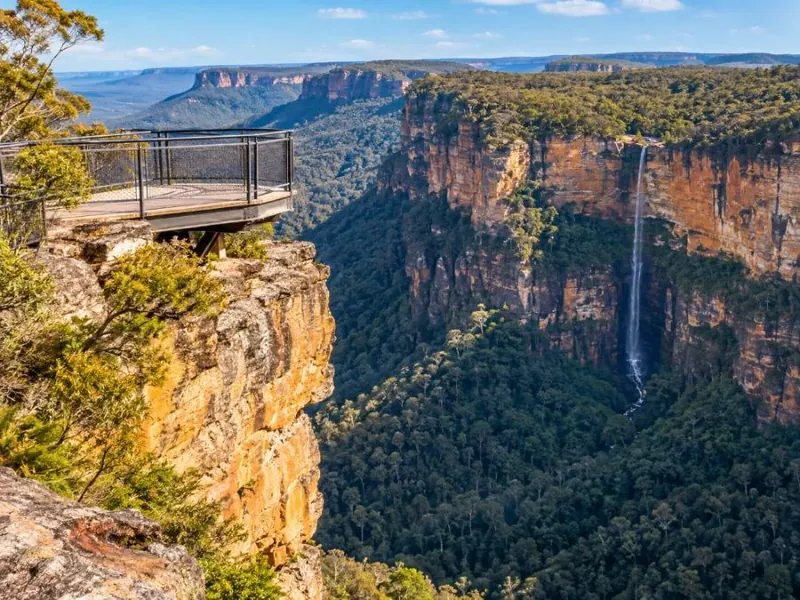
- Late afternoon: NSW National Parks recommends Evans Lookout at Blackheath for sunrise or sunset, when the sandstone glows orange.
- After dark: the Katoomba Falls night-lit walk lights up at dusk.
Weekdays outside the school holidays are the quietest. On a weekend, start early or stay late.
Is it safe to visit in bush fire season?
Generally yes, with planning. October to March is fire danger period; check the park alerts and the fire danger rating on the day.
NSW National Parks sets the bush fire danger period as October to March. For 2026 to 2027, a Park Fire Ban applies in Blue Mountains National Park from 1 October 2026 to 31 March 2027: no campfires or solid-fuel barbecues and stoves (park alerts).
- Total Fire Ban days: no fire may be lit in the open, and NSW National Parks may close parks when the risk to visitors is high.
- Heat: carry more water than you think, rest often, and skip long walks on hot afternoons.
- Tours: they usually swap lookouts rather than cancel. If a day is called off, the free cancellation up to 24 hours before on every tour here gives some cover.
More detail is in our fire season post.
When are Winter Magic and Yulefest?
Winter Magic is a one-day festival in Katoomba on the winter solstice in June. Yulefest runs through June, July and August.
Winter Magic Festival: held in Katoomba on the winter solstice, with a Grand Parade and more than 100 stalls. The 2026 festival was on Saturday 20 June. Expect busy trains and road closures in town on the day.
Yulefest: the Blue Mountains' “Christmas in July”. Hotels, restaurants and guesthouses serve Christmas-style meals by log fires from June to August. Booking ahead is wise for weekends.
Both make a good reason to stay the night. See where to stay.
What festivals are on in spring?
The Leura Gardens Festival in early October and the Blackheath Rhododendron Festival in early November.
- Leura Gardens Festival: private cool-climate gardens open to visitors, with a hop-on hop-off bus between them. The 2026 festival ran from 2 to 5 October; funds go to local health causes.
- Blackheath Rhododendron Festival: the next one is on Saturday 7 November 2026, with a street parade on the Saturday of the first full weekend in November.
Spring is also when NSW National Parks says wildflowers and birdlife are at their best, so a garden weekend pairs well with a walk.
Will mist or rain spoil the view?
Sometimes, for an hour or a day. Mist can fill the valley in minutes and clear just as fast, so keep a spare day in your plans.
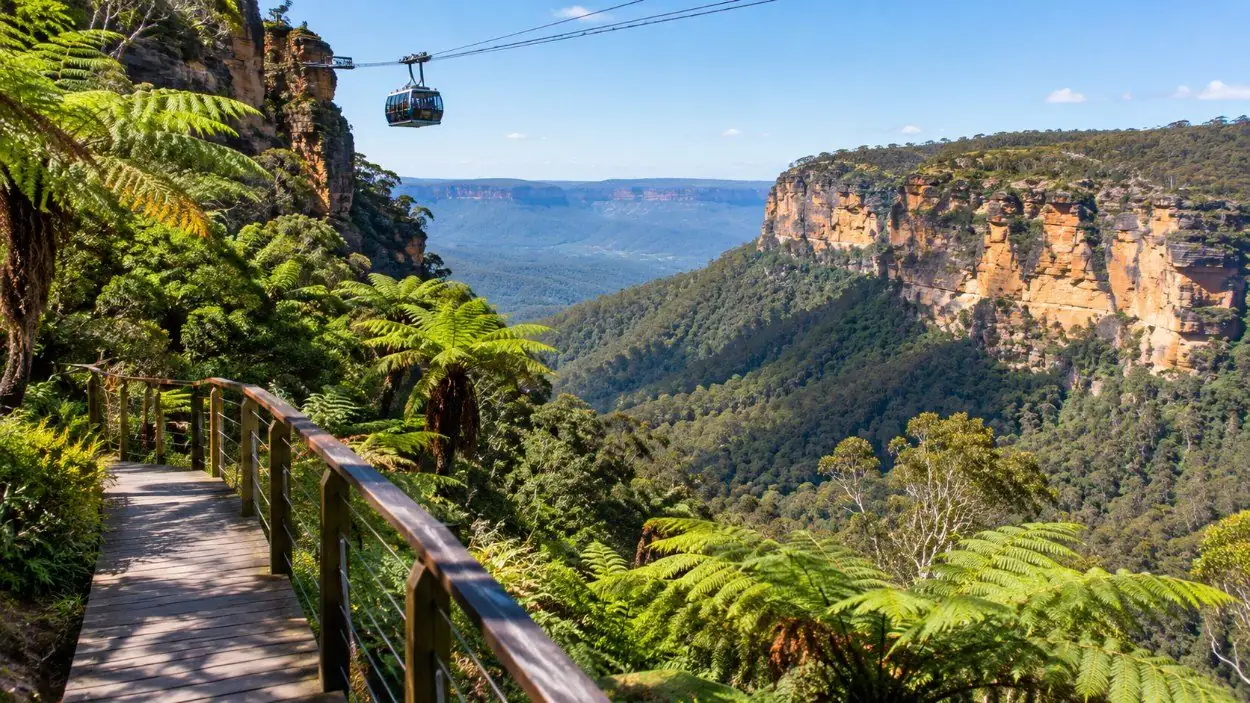
Katoomba gets about 1,414 mm of rain a year, and February is the wettest month (BOM). Low cloud and mist can roll in at any time of year at 1,000 m. Most tours run in all weather, including the waterfall walk day and the Scenic World day, and the Scenic World rides operate in the rain.
Two tips. Book early in your Sydney stay, so you can move the date if the forecast looks grim; all ten tours on this site cancel free up to 24 hours before. And wear shoes with grip: wet sandstone steps are slippery.
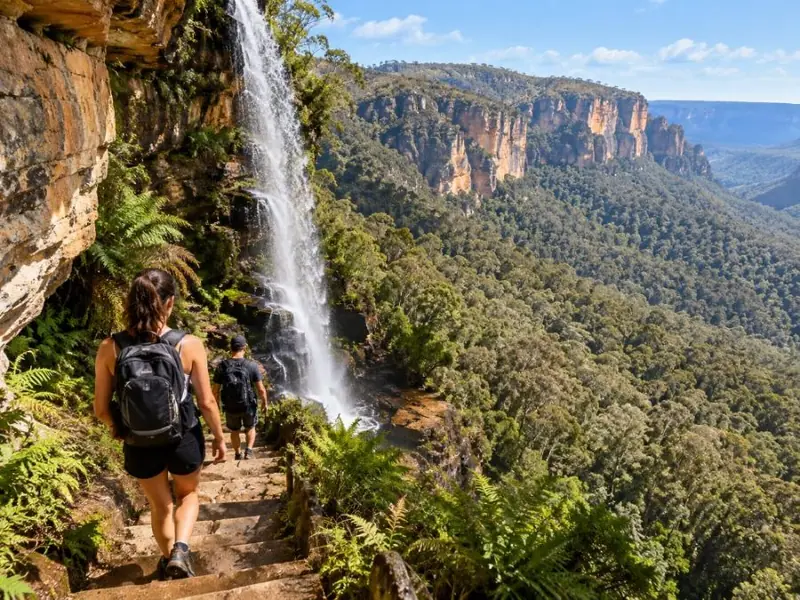
Runs in all weather: Wentworth Falls, the Three Sisters and a valley lookout, with lunch on the way.
Book thisFrequently asked questions
Which month is best to visit the Blue Mountains?
March to May for clear, cool walking weather and September to November for wildflowers and gardens. NSW National Parks recommends autumn for bushwalking and spring for wildflowers and birdlife.
What is the coldest month in the Blue Mountains?
July, with an average high of 9.6 °C and low of 2.7 °C in Katoomba, according to the Bureau of Meteorology.
What time of day should I visit the Blue Mountains?
Early morning, before the tour coaches reach Echo Point, and on a weekday if you can. Late afternoon is best for sunset light, for example at Evans Lookout in Blackheath.
When is the bush fire season in the Blue Mountains?
October to March. A park fire ban applies in Blue Mountains National Park from 1 October 2026 to 31 March 2027, and parks can close on high-risk days.
Ready to book
Choose your tour
Free cancellation up to 24 hours before on every option.
Wild Kangaroos & Sunset, Late Start
- Van pickup at Circular Quay, 9:30 a.m. to 12:30 p.m. by season
- Guided bushwalks with easier options
- Pie lunch from Mountain High Pies
Waterfall Walk & Three Sisters Day Tour
- Minibus from Haymarket, back around 5:30 p.m.
- Guided 90-minute waterfall walk
- Three Sisters and valley lookouts
Secluded Lookouts Tour with a River Cruise Home
Govetts Leap, Evans Lookout and more, Scenic World optional